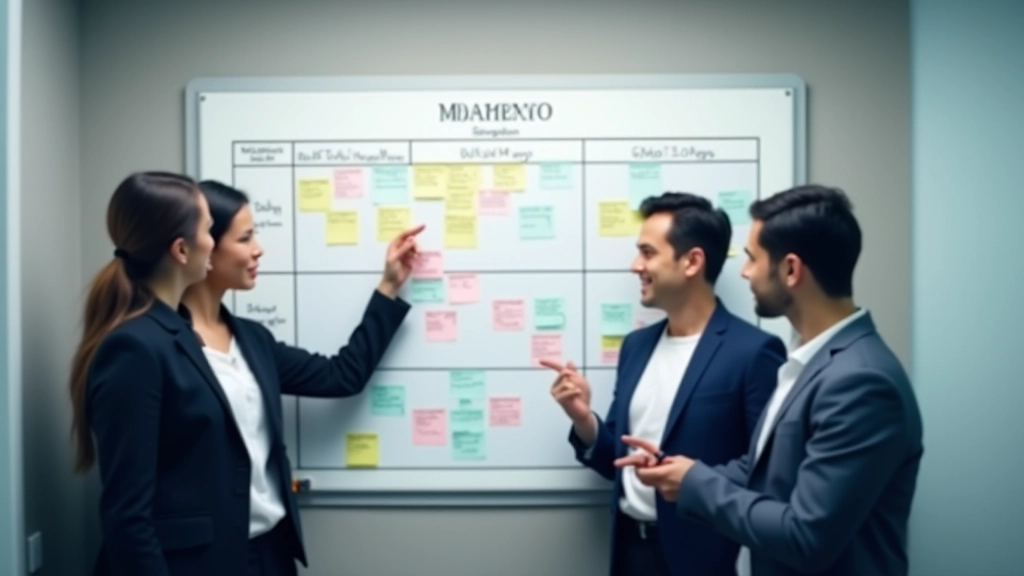

Weekly Planning Template That Actually Works
Step-by-step process for planning your week on Monday morning. Includes template you can adapt for your team right away.
Read ArticleLearn how to categorize tasks by urgency and importance. This framework helps teams focus on what actually drives results instead of just reacting to noise.

Most teams spend their days putting out fires. You’re responding to emails, attending unplanned meetings, handling whatever feels loudest in the moment. Then the week ends and you realize nothing important actually got done.
The Eisenhower Matrix changes that. It’s simple — just four boxes — but it forces you to think clearly about what you’re spending time on. President Eisenhower used it to manage the military and the country. You can use it to manage your week.
The framework separates tasks into four categories based on two questions: Is this urgent? Is this important? That’s it. But the way you respond to each category is completely different.

The matrix has four quadrants. Think of it like a grid with “Urgent” on one axis and “Important” on the other. Each quadrant tells you a different story about that task.
Do these first. Crisis situations, deadlines that are actually happening today, problems that need immediate attention. Your client just called with a complaint. Your server went down. The quarterly report is due in three hours and it’s not done yet.
Schedule these. Strategic work, skill development, relationship building, planning. This is where real progress happens. But because nothing’s screaming at you right now, it’s easy to skip. That new product feature? That team training program? The quarterly planning session? All Quadrant 2.
Delegate or minimize. Someone else needs something from you, and they need it now. But it doesn’t move your goals forward. Most emails fall here. Many meetings too. Someone’s asking you a question that’s urgent to them but doesn’t matter to your work.
Eliminate. Social media scrolling. Unnecessary meetings. Busywork. These feel productive but they’re not. They’re time-wasters. Most people spend way too much time here without realizing it.


Don’t just draw four boxes and think you’re done. The real work is sorting your tasks honestly.
Don’t filter yet. Just dump it all out. Projects, emails, meetings, ideas. Everything.
Is this urgent? Will it blow up if I don’t do it today? Is this important? Does it move my actual goals forward?
Be honest. Most tasks aren’t as important as you think they are. And some things that feel urgent really aren’t.
Block time for important work before you let everything else fill your calendar. This is the shift that changes everything.
Urgent & Important
Handle immediately. These need your attention right now. Set up a system so you can respond quickly — whether that’s checking email every 30 minutes, having a crisis protocol, or keeping some time blocked for emergencies.
But don’t live here. If most of your time is Quadrant 1, something’s wrong with your planning.
Important but Not Urgent
Schedule blocks of time. Friday afternoon for strategic planning. Tuesday morning for skill development. Wednesday for relationship building with key partners. Treat these appointments like they’re with your most important client — because they are.
Most teams that get results spend 60-70% of their time here.
Urgent but Not Important
Delegate. If you can’t delegate, set boundaries. Tell people when you’ll respond to their request. Create systems so you handle it in batches rather than jumping between tasks. Check email at set times instead of constantly.
This quadrant will steal your time if you let it. Don’t.
Neither Urgent nor Important
Eliminate. Stop doing it. If it’s truly neither urgent nor important, why are you doing it at all? That’s an honest question to ask yourself about each task here.
This is where most time-wasting happens. Protect yourself from it.
You can understand the framework and still use it wrong. Here’s what teams get wrong most often.
A client email is urgent to them. It might not be important to your actual goals. A meeting request is often urgent but not important. Learn to separate these two things. Urgent means it needs attention now. Important means it actually moves your business forward.
Because it’s not screaming at you, teams neglect it. Then they wonder why they never have time for strategy, training, or innovation. Block time for Quadrant 2 like you’d block time for your most important meeting. Because it is.
Your priorities change. What was important last quarter might not be now. Review your matrix weekly. Move tasks between quadrants as circumstances change. This isn’t a one-time exercise.

The Eisenhower Matrix is an educational framework for understanding task prioritization. Implementation results vary based on your specific circumstances, team structure, and organizational context. This article provides guidance for learning and understanding the framework. Actual application should be adapted to your unique situation. Consider consulting with management or organizational development professionals for guidance specific to your team.
The Eisenhower Matrix isn’t complicated. Four boxes. Two questions. But what it does is force you to think about where your time actually goes. Most people never do that.
When you start using this framework, you’ll probably realize you’re spending a lot of time in Quadrants 3 and 4 — responding to things that don’t matter. That realization is uncomfortable. But it’s also where change starts.
Start with one week. Put every task in a quadrant. Protect your Quadrant 2 time like your job depends on it. Because honestly, it does. The work that actually matters — the strategy, the growth, the relationships — all lives in Quadrant 2.